
Tempering - Resolving Complexity - Part 5
The curtain opens on our final Act.
Come, come. Have a seat. There are warm chocolate chip cookies and chocolate whipped cream to dip them in. There are also some freshly whipped Mexican hot chocolates. Careful though, both are a touch spicy and the one on the left is spiked a little to ward off the chill, if you are so inclined.
Before we get to tempering I want to check in and see if anyone has any questions?
Nothing? Ok, well I’m both a little surprised and also pretty gratified. In that case, let’s dive into tempering.
As much as I’d like to tell you only the very basics, I’ve been doing this enough years to know that in this case, simplifying too much leaves folks wandering in the dark when something doesn’t go quite as expected and tempering does go awry pretty often. Much like I told you about different kinds of cocoa beans, and why we roast and the basics of recipe development, you need some foundational information about cocoa butter, the actual thing you temper.
Tempering is only necessary if you want solid chocolate that you eat as a solid chocolate; bars, enrobbed and dipped goodies, those kinds of things. I didn’t temper any of the chocolate I used in the cookies or whipped cream or the hot chocolate.
Tempering is a type of crystallization. Crystallization is no more than a way to describe how the cocoa butter fits together on a molecular level. Let’s take salt as a very simple example. In table salt there are rows and columns of sodium and chloride atoms stacked evenly together. There is only one way for them to stack together. Think of an orderly stack of baseballs and basketballs, each alternating with the other. Cocoa butter is more complicated. It is more like a bunch of ever so slightly mismatched forks. You can stack the handles together. You can stack the tines together. You can alternate them. You can mix and match them. You can even shove the tines together. All told you can stack them roughly 5 ways. The goal in tempering is to stack them in one particular and stable way.

Editor’s note: Lets put a fork in this metaphor. it’s done.
Those stable crystals are called Type V crystals. A bunch of mixed random crystals is called bloom.
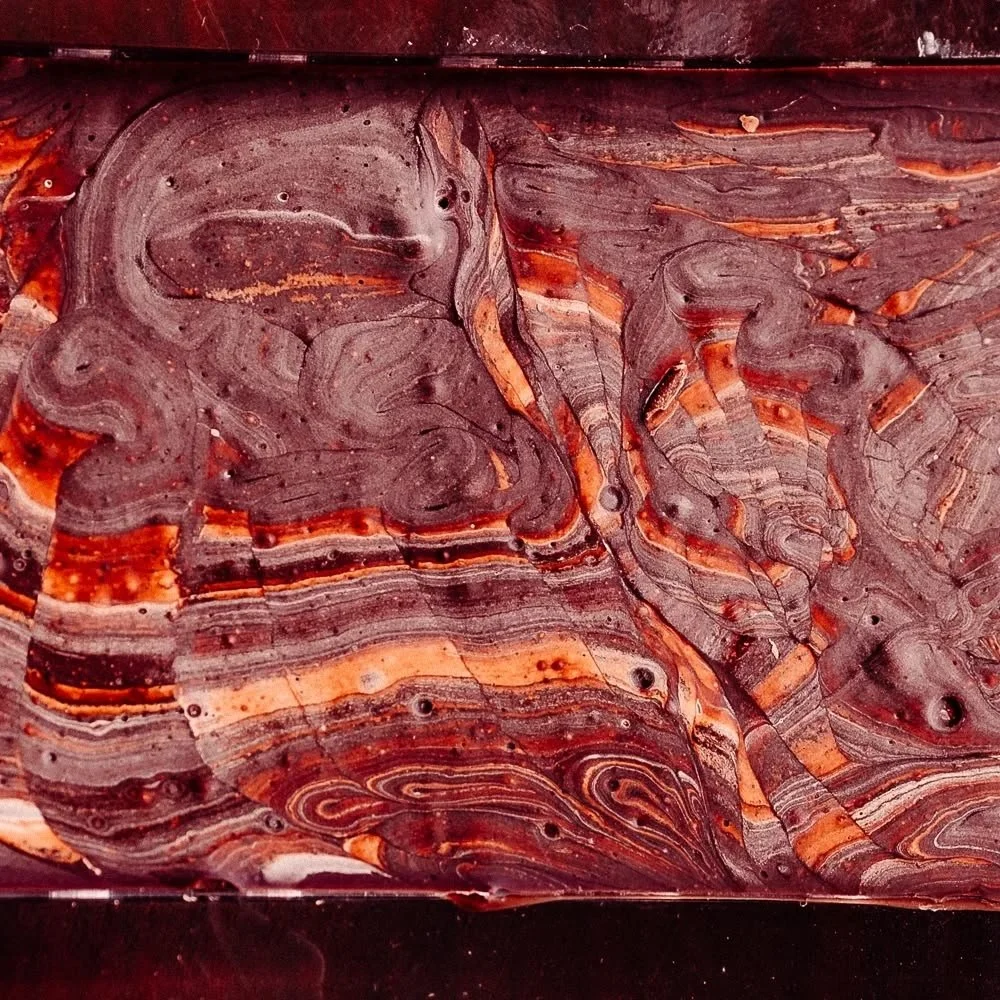
Bloomed chocolate can be beautiful to look at, but is coarse and unstable.
Bloomed chocolate is what you’ll get if you don’t temper chocolate when it comes out of the melanger. And that is fine. You can temper at any time and do it as many times as you like.
So what does that look like conceptually:
The chocolate is melted which literally melts of all the crystals.
It is cooled until it thickens slightly. That thickening are the forks stacking up in random orders. There are some type 5 in there but the other 4 types are in there too.
The real magic happens when the chocolate is heated back up just a little. All the crystals that are not type 5 melt away and what is left is a kind of a lattice of Type 5 crystals. It is sort of a blueprint or DNA telling the cocoa butter what to do when it cools down a final time. A few of the other crystals might form but generally speaking the lattice of type 5 crystals overwhelms the chocolate and rules the day.
Bobs your Uncle.
The chocolate is then left to cool and solidify into tempered chocolate with a nice shine and snap.
What the above looks like in practice:
Heat the chocolate to 100F or so.
Cool it until it starts to thicken. Usually 79-81 F. It is a range as cocoa is a natural product and there are lots of different kinds of forks in there.
Heat it back up. 85-86 F for white and milk chocolate, 88-89 F for dark.
Pour it into molds or dip things in it or whatever and then cool it.
Heat, cool, heat a little and Bob’s your uncle (Bob Ross most likely).
That is classic tempering. You can do it in a bowl, or on a stone slab. It doesn’t matter. The pattern is the same.
Destroy all the crystals by melting.
Cool it some to form all the crystals.
Heat it a little to melt the crystals you don’t want and abracadabra, you have tempered chocolate.
It is kind of three card Monty where you are in charge of keeping your eye on the ball. The ball is the type V crystals if that isn’t obvious. The key is knowing you have to do it.
Remember why you are doing each step, where you have put the ball as it were and I think you’ll be fine and more knowledgeable that 95% of people who use chocolate out there.
With that, I have a super secret, nearly cheating method I want to tell you about.
Come in close.
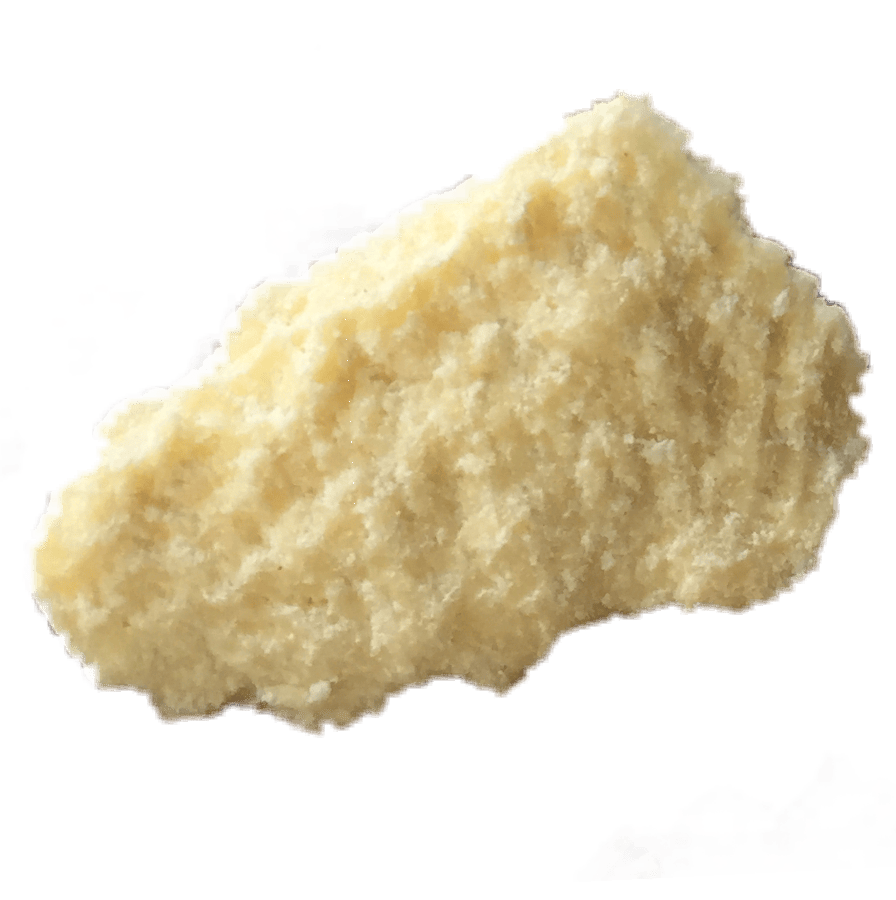
Cocoa Butter Silk
Is like having a cheat code for tempering.
It’s call Silk. It is a pure lattice of Type V cocoa butter crystals ready to add to your untempered chocolate.
By adding silk/the Lattice you eliminate need to manually create them with temperature adjustments.
You have inoculated the chocolate and as soon as you cool it the cocoa butter forms around the lattice and spreads and you have tempered chocolate.
It’s freaking magic I’m telling you.
Heat the chocolate to 100F or so.
Cool it to 95 F.
Stir in 1% silk.
Pour it into molds or dip things in it or whatever and then cool it.
If that isn’t Complexity Resolved into Simplicity, I don’t know what is!
And that my friends is the end of my tale of simply making some chocolate.
Do your best to think of chocolate making as a form of cooking and you’ll be fine. It truly isn’t much harder than making a batch of chocolate chip cookies.
Flour, sugar, butter, eggs, chocolate chips. Form, bake, enjoy.
Roasted nibs, cocoa butter, sugar. Refine, temper, enjoy.
You are going to have to do it a few times to gain some muscle memory but that is about it.
Thanks for listening my friends and never be shy about asking me questions if you have them. That’s what I’m here for.
Now hand me another cookie and some hot chocolate. I have to get ready for my upcoming Chocolate Making Classes.
