
Mold, moisture, and cacao beans.
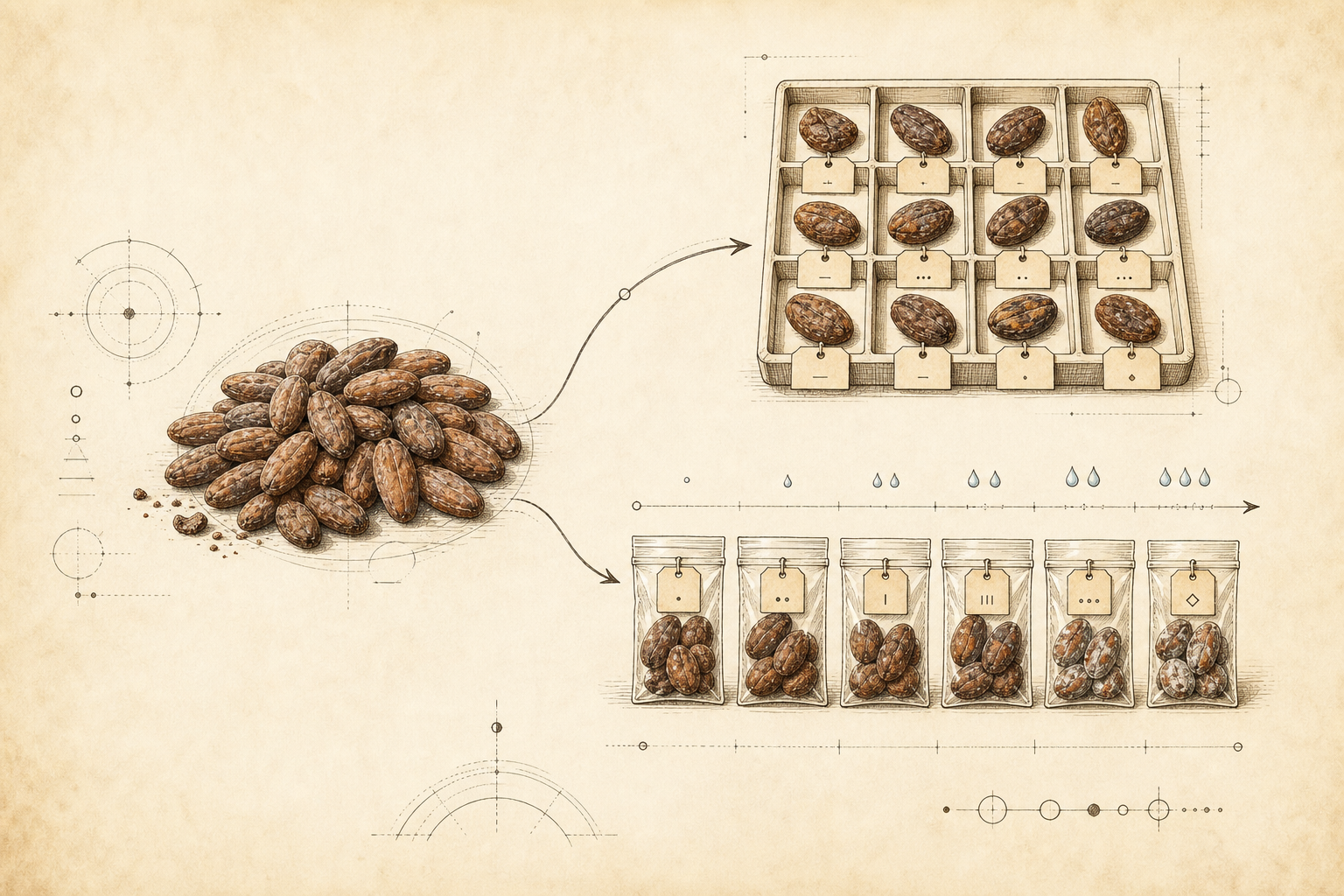
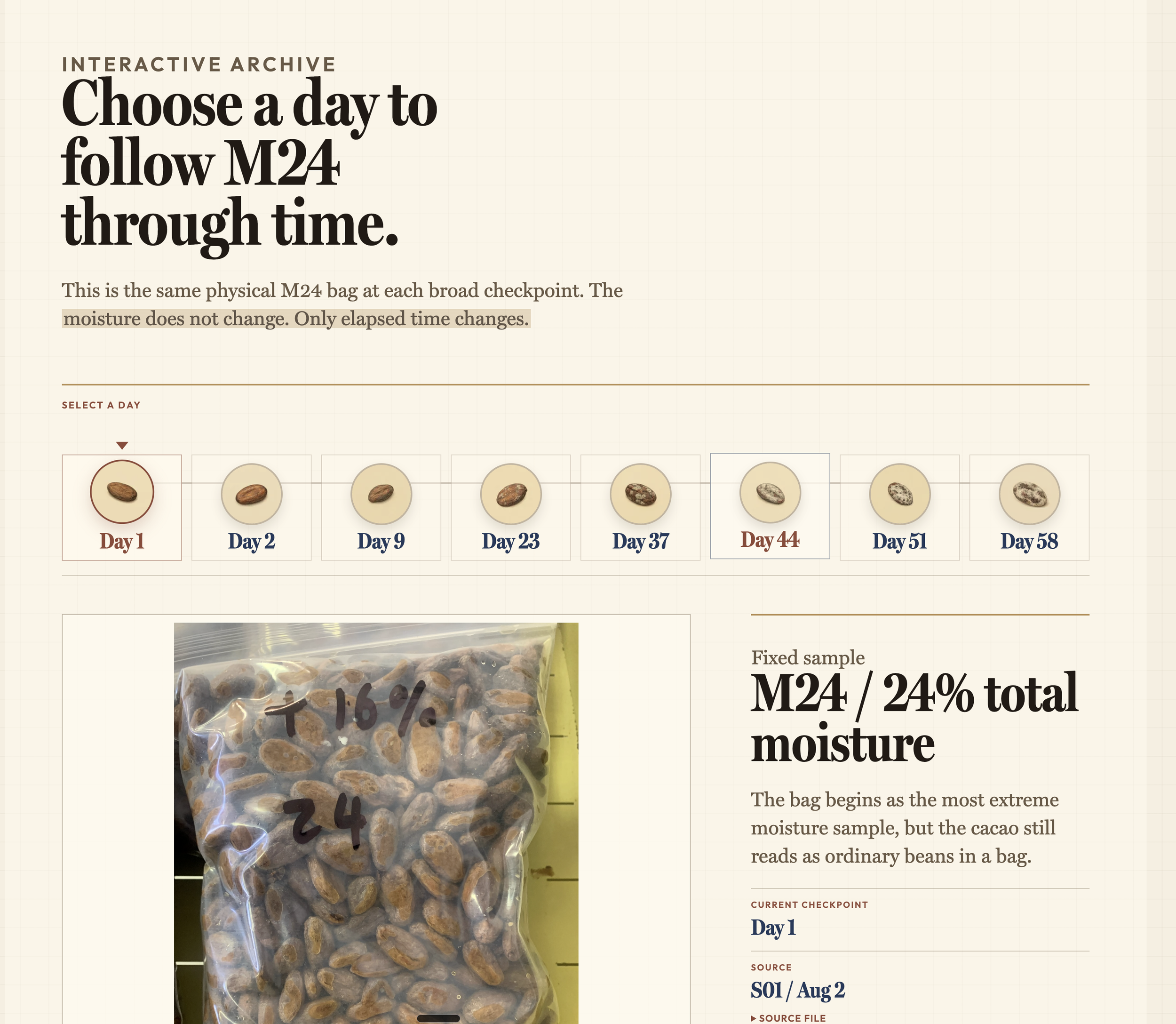
Explore the Study
If you’re more of a visual learner or want to dig deeper into every single image we have of the study we’ve made a very special interactive study. Check it out.
Such innocuous questions that I never felt I had good answers for. Well, I had good answers but virtually no data to back my my claims. I finally have some data and answers. Read on.
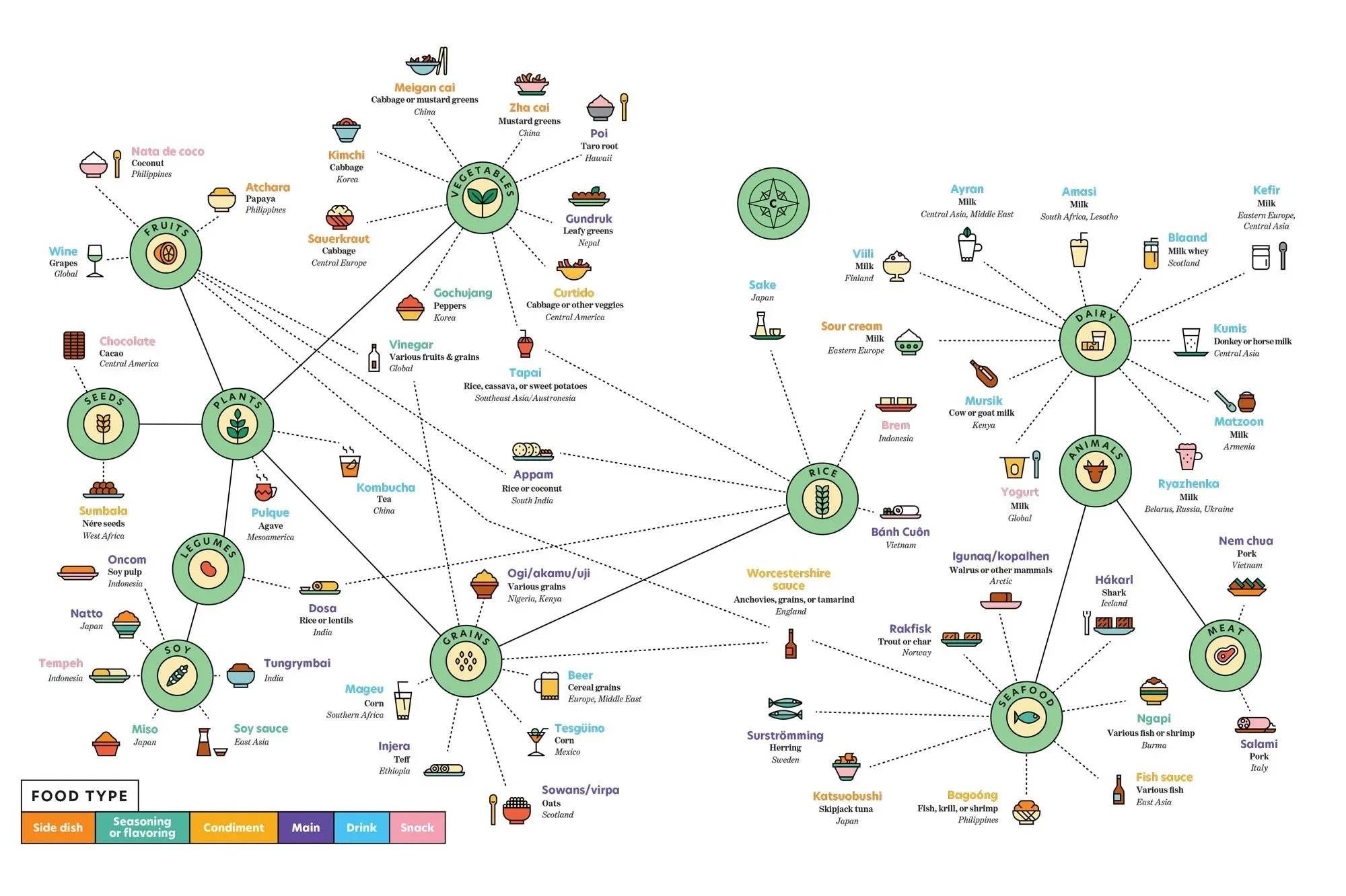
Humans have been fermenting for thousands of years and have developed traditions that, generally speaking, keep us safe. I’ve fermented foods most of my life, starting with bread in my youth, kimchi and sourdough in my teens, and a wide variety of alcohols for the last few decades, and recently I’ve started getting really deep into all manner of fermented foods to the point that I searched out this graphic to the right to see what I was diving into.
Properly fermented foods don’t just happen. You have to set out the correct conditions to encourage the growth of the cultures you want and discourage the cultures you don’t want. Its an active process of caring. Over time, what started to become clear to me is that toxins also don’t just happen. They take very particular sets of circumstances and, in nearly every case, I’ve found the resulting product isn’t something you would want to eat, as it tastes or smells really bad.
Fermentation relies on the Fungi Kingdom: Yeasts and molds in particular, not so much mushrooms, in addition to a variety of microorganisms. When fermentation goes awry various chemicals can be produced. Vinegar from acetobacter in wine, penicillin mold in bread. Other molds in cheeses. That science experiment of leftovers you found in the refrigerator that has cool orange fuzz on it. All of those are fermentations gone awry and, generally speaking, we don’t want to eat them as they can make us sick, hence our revulsion to those tastes and aromas.
I’ve long heard that unlike the dangers of botulism toxin, where the food can taste perfectly good but be deadly, it takes some pretty serious inattention to fermentation to get it to the stage that toxins are formed and when they are formed, the resulting product has serious taste and odor issues.
If you have not picked up where I am going, our concern here is the safety of cocoa beans and chocolate.
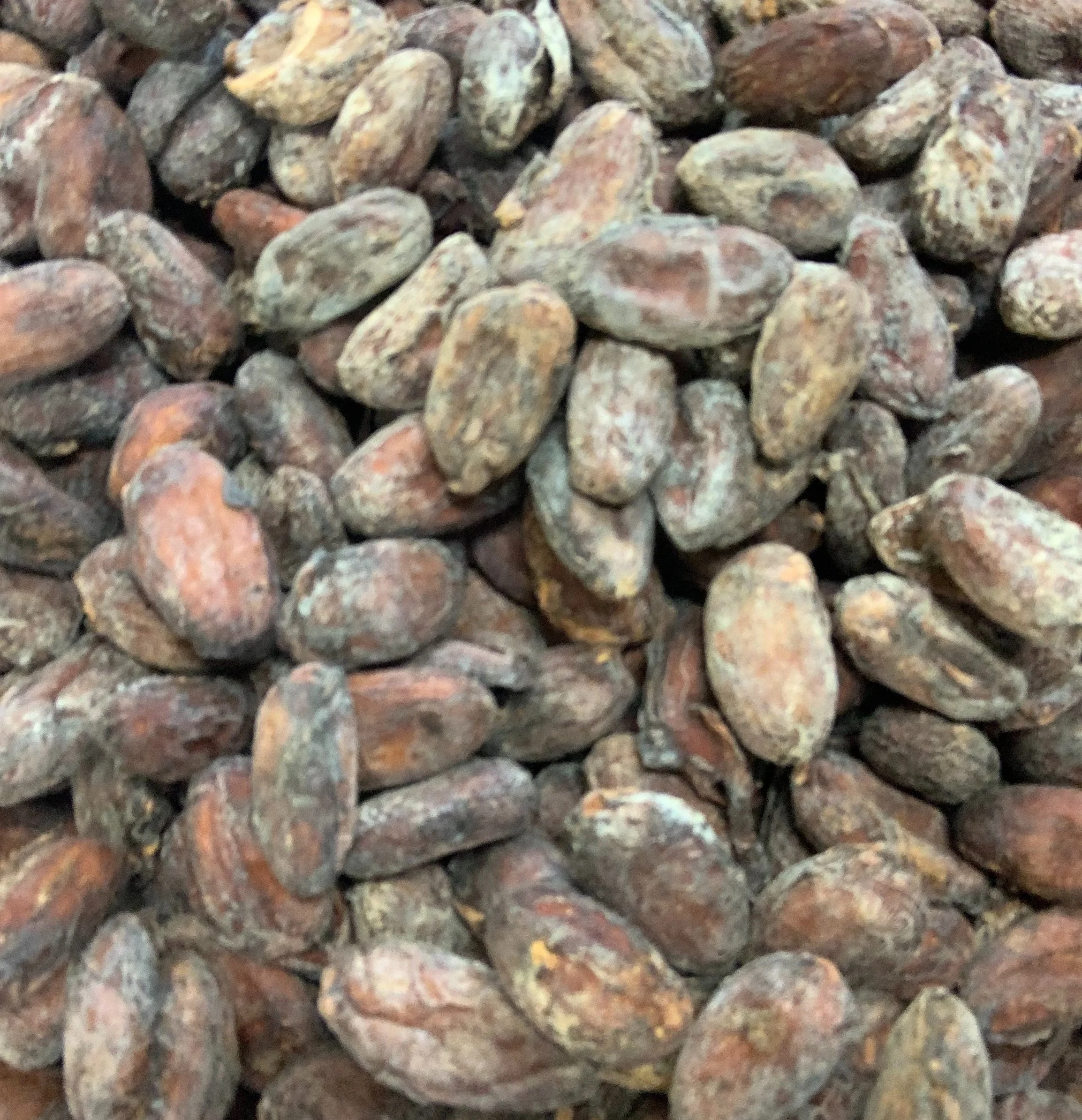
Through the years I’ve observed people become increasingly concerned about mold in cocoa and the toxins they can potentially produce. I get questions about a little bit of white residue on the outside of a cocoa bean.
What’s the white stuff on some of my beans? Should I throw moldy beans away? Can I roast roast and process moldy beans as they are? Should I first attempt to remove the moldy ones? Should I wash and dry them first, then process? Are beans with white dangerous? I keep hearing about mycotoxins and how dangerous they are. How dangerous is chocolate?
Some molds can produce mycotoxins and aflatoxins (I’ll just refer to them as toxins from now on to keep the repetition down.) Although roasting can kill molds and microorganisms, the toxins they produce are not usually destroyed and can remain a danger. It is also worth noting that as odd as it may sound, not all mycotoxins are dangerous. The mold Penicillium roqueforti, which is responsible for the blue veins in blue cheese, produces mycotoxins. The key here is that the toxins are toxic to other cultures but not much to humans. Some people have reported slight tongue tingling when eating blue cheese, but I never have. Ruzz’s editor note: blue cheese makes me wheeze and have a tingle.
Let’s cover the basics: Virtually all the cocoa beans that are made into chocolate are fermented. Nearly every mold of concern requires some pretty specific conditions (pH > 5, 75-85% humidity, 60-90 F, and sufficient time, as a token example) which the process of fermenting for good-tasting cocoa specifically inhibits. The pH is too low, the humidity and temperature are too high. It would take a pretty serious breach of protocol for enough mold to take hold to 1) ruin a batch of cocoa flavor-wise and 2) get enough of a foothold to produce the toxins that are dangerous to humans.
About the only time molds might have a chance is during the drying phase. If the humidity comes down too slowly… a very distinct flavor defect is invariably introduced.
This concern about cocoa and toxins reminds me of the scare a few years ago about coffee and acrolein. Acrolein is a pretty nasty organic chemical that was found to be in roasting coffee exhaust… and suddenly the home roasting community was in an uproar about the toxicity of home roasting, how much filtration and ventilation was needed, and so much histrionics ensued. Like so many things, there was a grain of truth to the concern. It was found that if you were a professional roaster of coffee, AND afterburners were not working properly, AND the exhaust was making it back into the roastery there could be enough of an accumulated dosage to pose some safety issues. Roasting a couple pounds a week at home… it just was not an issue.
All of that, though, is just an unsubstantiated opinion on my part. I’m nothing if not a scientist and gatherer of data. To that end, I designed a study to see what was happening in cocoa around the world and what happens if I encourage mold growth.
Below is a rather detailed, albeit dry, scientific paper style report on my study. We also have a more interactive summary with the photos I won’t be showing below. I recommend you check out both.
Studying the effect of moisture on mold growth on Theobroma Cacao and resulting mycotoxins
The Design
The baseline:
Cocoa from 12 countries was sampled.
The raw samples were analyzed, husk on.
10 of the samples were taken from good-tasting stock.
2 samples were from rejected samples based on odd flavors.
1 rejected sample was visually clean.
1 rejected sample was musty in aroma and irregular in appearance.
Samples spanned the range of exceptionally clean to beans with white residue.
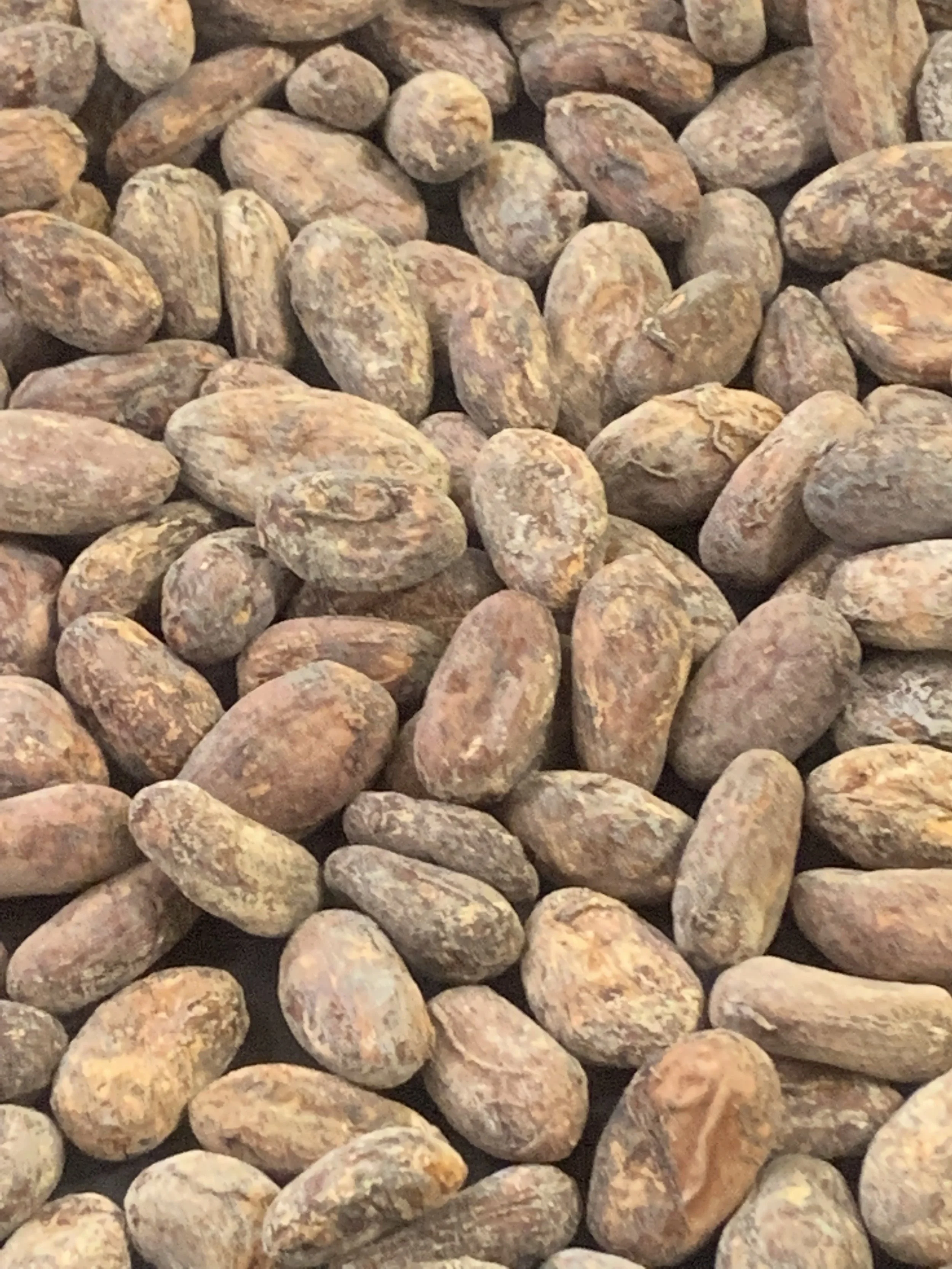
Visually clean sample
“Musty” reject sample
The mold and fungal challenge:
One good-tasting sample of the 10, chosen to be of average preparation (mostly ‘clean’ but with some irregularities), was further subjected to 10 levels of added moisture from 0 to 16% and set in conditions to encourage maximal mold and fungal growth for 12 weeks.
Analysis
The 12 raw baseline samples were analyzed for a sweep of toxins (mycotoxins and aflatoxins).
Samples of the 12 cultured samples were analyzed for a sweep of toxins.
The remaining 12 cultured samples were roasted, winnowed, and made into chocolate.
Samples of the 12 cultured prepared chocolate were analyzed for a sweep of toxins.
The Intent and Procedure
The 12 raw samples from 12 countries were tested for toxins to establish if any background levels of toxins were noted. The two flavor reject samples were included to see if any correlation could be found between flavor and toxin levels. Noting that many people have voiced concern about post-harvest humidity or moisture, a series of samples were set up with steadily increasing levels of water to see the effect on mold and fungal growth, toxin levels, and taste and again to study if any correlated effects could be found.
Raw samples
I’ve decided to withhold the countries/origins chosen so that data cannot be taken out of context to prove a given bean is universally safe or dangerous.
12 100 g samples were taken, sealed in new polypropylene zip-lock bags, and held until the end of the study, for analysis. They were stored at room temperature in the dark. They were labeled A-L.
Moisture study
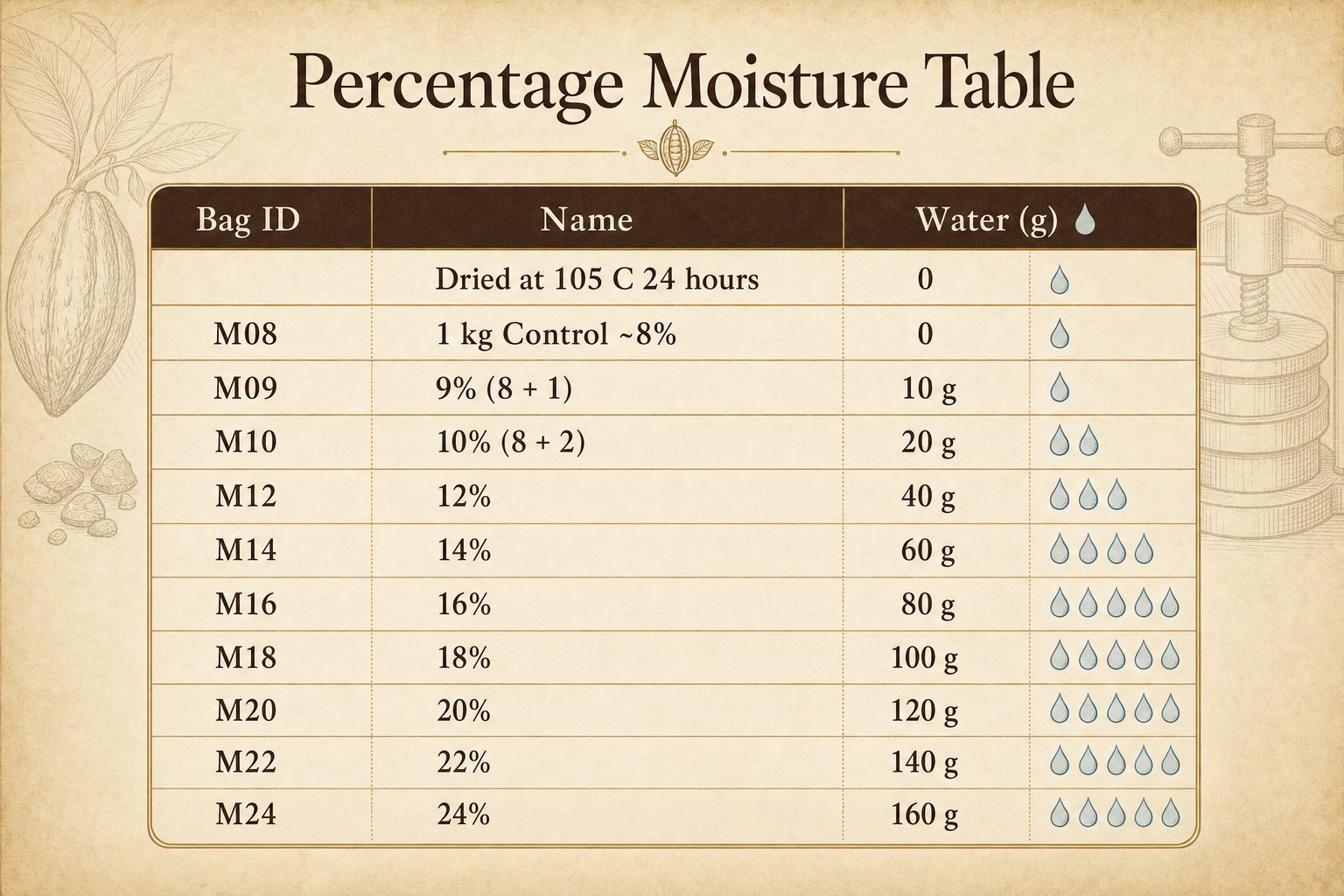
12 1000 g samples of raw cocoa beans were prepared as follows:
1 & 2 - Moisture determination. Two 1000 g samples of cocoa beans were dried at 105 C for 24 hours. After 24 hours, the samples were cooled with desiccant for 1 hour and weighed. Final weights were 918 g and 921 g, indicating an average moisture content of 8.05%. For the purposes of this study, I’ll be rounding to 8%.
To samples 3-12, freshly boiled and cooled distilled water was added at the rates above. To minimize potential contamination, samples were placed in new polypropylene zip-lock bags and water was added to the samples. The bags were sealed and mixed well.
Samples were stored at room temperature in the dark.
After 24 hours, samples 3-10 showed no sign of water. Samples 11 and 12 were capable of absorbing all the water, and trace moisture was observed.
Samples were observed and recorded roughly every week. There was a general trend of white growth, followed by green/blue, yellow, and brown. Research tends toward thinking they were all molds of various types. Growth density and type roughly correlated with the amount of water added.
I started summarizing the growth in some fancy charts but realized (foreshadowing) it is not of particular use.
The TLDR (or too long, I didn’t make 73 fancy charts) is there was no observable mold growth for the 8%, 9%, 10% or 12% total moisture content samples for the entire 13-week study.
The 14%, 18%, and 20% moisture samples steadily grew white mold, never quite covering all of the beans, with a little green mold showing up in the final weeks.
The 22% and 24% moisture samples were completely covered in white mold by the end. Significant green and yellow molds also grew as the white mold started to die off (it went dusty-looking).
In the 24% moisture sample, a further brown mold was observed.
At the end of 13 weeks, bean samples were selected of each colored mold, and the beans were cut in half to observe mold penetration into the bean. I was very pleased with the consistency of the results.
For clarity, it is worth pointing out that beans with no mold growth did not show any mold penetration meaning there was growth on the husk but no mold or mycelium inside the beans.
White mold:
No penetration was observed, even on the beans with the heaviest growth.
Green mold:
There was penetration in every bean sampled that had green growth, regardless of how much green coverage there was.
Yellow mold:
Very similar to the green mold. Penetration was found in every sample, regardless of how much there was growing on the bean.
Brown mold:
Penetration was very deep and vigorous.
Sample preparation
All post growth samples were placed on flat trays and dried at 72 C / 162 F for about 12 hours, until the original weight of 1000 g was reached. The goal was to reduce the moisture content, thereby stopping any mold growth.
The 100 g samples were sub-sampled for analysis.
Chocolate Making
The remaining 900 g was roasted, cracked, and winnowed.
The nibs were made into 75% chocolate consisting of 70% nibs, 5% cocoa butter, and 25% sugar.
The chocolate was refined for 48 hours. Due to the number of samples, multiple batches had to be made in one melanger. Samples were processed lowest to highest, moisture-wise and thoroughly cleaned between batches.
The chocolates were tempered with 0.5% Silk.
50 g sub-samples were taken for analysis.
The reasons for making and testing the chocolate were threefold:
In theory, roasting will kill any molds and their spores.
I wanted to taste the chocolates, but only those that did not contain toxins.
I’ve often heard toxins are not destroyed in roasting or further cooking or refining, so I tested this hypothesis.
Analyses
All the samples were tested at an accredited laboratory I’ve worked with professionally in my prior chemist life. Each sample was analyzed for the following 12 toxins that are known to be dangerous to humans and found in food products.
Aflatoxin B1
Aflatoxin B2
Aflatoxin G1
Aflatoxin G2
Deoxynivalenol
Fumonisin B1
Fumonisin B2
HT2-Toxin
Ochratoxin A
Ochratoxin B
T2-Toxin
Zearalenone
Results
So after weeks of planning, months of observation, further weeks of chocolate making, I sent off the samples. A few weeks later the analysis reports came back… and goodness I have to say the results surprised me. What I got was… Drum roll please… was page after page of this:
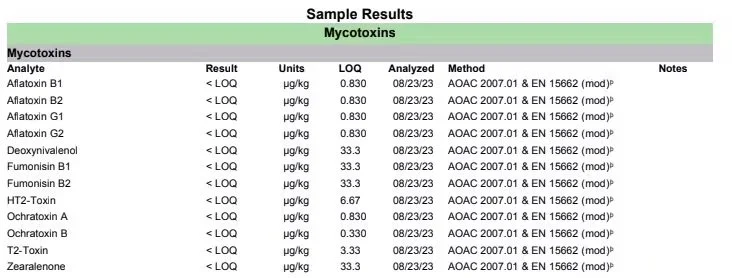
If you are not sure what you are looking at, allow me to translate. LOQ is the Limit of Quantitation. As you will notice, all the results are not numbers but <LOQ, meaning the results were all “less than the Limit of Quantitation”.
In layman’s terms, the laboratory didn’t find ANYTHING in the samples I provided.
I was stunned. With the sheer amount of mold growth I was sure we had to have some toxins. Mind you, I’m also thrilled that none of the 12 raw samples contained any toxins and likewise happy the chocolates contained none, so we could taste them, but wow, 12 weeks of spontaneous mold growth and nothing untoward was found.
If you notice, I did this study nearly three years ago. It’s taken me that long to wrap my head around what I wanted to say as a result.
Before that, some detail about the chocolate tasting my staff and I conducted. It was 100% optional but everyone willingly join with lab assurances no toxins were found.
There is something funny and interesting about humans, and nature in general. We often default to avoiding things that can harm us. Feces harbors e.coli. Spoiled meat and milk can contain Salmonella, E. coli (EHEC), Listeria monocytogenes, Staphylococcus aureus, and Clostridium perfringens. Moldy grains, breads, cheeses, and don’t you know it, cocoa beans, can contain the aforementioned toxins from a variety of aspergillus. The funny thing is in nearly every case (I can’t find any exceptions but I’m not saying there aren’t any), the smell or taste that we are adverse to is NOT the dangerous thing. We’ve just learned to associate them as they normally occur together. That means you can have certain food preparations tha ping our spidey danger sense, but are perfectly safe to eat. Aged meat is very strongly scented and some people won’t eat it. Some of the most flavorful cheeses out there are chock full of non-toxin forming aspergillus, as are a bunch of eastern fermenations. Sake anyone? Aspergillus orizae. Miso, fish sauce, soy sauce, kimchi? More molds and bacteria.
All that is by way of saying it was a very interesting experience tasting chocolates we knew were technically safe but tasted very strongly of mold and elicited the nope nope nope response in more than one person…but once you got past it, some folks were able to actually evaluate it for what it was and not what it might represent (danger).
So what did we taste?
The control and the first 4 samples with very minimal mold growth basically tasted like chocolate. Those were the ones with 8%, 9%, 10% or 12% total moisture, i.e 0 - 4% added water.
The 14% and 18% were different but certainly not bad. It was generally agreed that even knowing the samples were safe, some people struggled to get past the oddness, while others went back for seconds.
20% showed some really interesting character, not unlike some aged cheeses. Being so out of context people were divided about it.
There was no question 22% and 24% had very strong mold notes and some odd bitterness. Looking back on the tasting notes, and looking through the lens of all the fermenation I’ve done in the last couple years I would say these were over-fermented. You can have too much of a bad thing, as it were. It well could be the yellow and brown molds. No one really liked them but no one spat them out.
With that, Yours Truly, the Alchemist at Large, had to Alchemist (verb, to do alchemy).
I had preserved a small portion of each batch and purposefully cultured a new 20% moisture batch and let it grow. I was not sure they would without having spored, but grow they did and the resulting chocolate was definitely interesting. Having given it to various people now over the years, no one has noted it as being moldy or off.
I leave that as food for thought. Time to wrap this up.
Conclusions
What this study does and does not prove.
First and foremost, this study does not prove that all chocolate is safe from mycotoxins if visible mold is present. It only proves the unidentified molds I grew did not produce measurable amounts of known toxic mycotoxins.
You can’t prove a generalization and a lack of data (no positive results) is NOT conclusive data.
On the other hand, there is a solid preponderance of evidence that cocoa should be generally considered safe from dangerous mycotoxins when it tastes good. And when it tastes bad, that is also not reason to assume it is dangerous.
I mentioned this study was done a few years ago and I’m only writing it up as I feel I have a certain perspective now to allow some reasonable conclusions:
From what I have gathered from research is that the concern of toxins in cocoa is primary on the origin side when beans cannot be dried in a timely manner and the beans start to molder (apt word, huh?).
It also seemed pretty clear that moisture or high humidity content stateside is of no particular issue since I could not get any mold to grow when adding up to an additional 4% water to the beans. Even in the near 100% humidity of Florida, cocoa beans left out will not absorb 4% moisture.
There is one gap in my study that I did not have a good way to fill. I cultured molds that had spores which made it through the fermentation and drying process or were introduced on the way to me. I was not able to test the effects of a bad fermentation or prolonged drying to the point molds grew. The thing is though, I’m quite confident, based on my years of experience with fermentation, that the conditions needed to produce toxic molds are so far afield from what is happening in origin as to simply not be of concern. Including the two beans that I rejected based on flavor was the only way I could see to potentially address this gap.
Coming full circle. I did this study to address general concerns I hear too frequently about mold, primarily white molds, and cocoa beans. For years I’ve been told that white on cocoa is either dried mucilage or not a concern unless the mycelium penetrates into the bean and I’ve never had one that penetrated. It follows my basic response was that white mold is not of concern and flavor remains the driving factor.
This study seems to support that stance.
None of the data suggest the white residues are of any concern. None were shown to penetrate, and regardless, none of the most common dangerous mycotoxins were detected.
