
Before I get into resolving some complexity about chocolate making I have an announcement to make.
We are offering 3 chocolate making classes in the early part of December. By the nature of being short, very basic 100 level classes, the first two classes, are more geared toward those roughly in the Pacific Northwest. I don’t right see them being worth flying in for, but you do you. The 200 level, all day course is more worthy of hauling your fine self to Oregon in my opinion.
Saturday December 6, 2025, 1-4 pm. Chocolate making 101 - Demonstration. This class is geared to those local enough attend pretty much a demonstration class. We’ll go through all the steps of chocolate making and you’ll see it done but won’t be doing a ton yourself. If you want to get your hands dirty you’ll also want the one the following Saturday.
Saturday December 13, 1-4 pm. Chocolate Tempering 102 - Workshop. In this class we’ll use the chocolate we made in Chocolate Making 101 the week before and dive into the theory and practice of tempering. You’ll do the tempering yourself and I encourage you to bring things you might want to mix into the chocolate. You’ll leave with a box of these inclusion chocolates. They’ll make great gifts for the holidays.
Each class is independent but the Tempering workshop will certainly build off of the 101 class but you can sign up for either one. Of course I encourage you to take both.
Sunday December 7, 2025, 9 am - 5 pm. Chocolate Workshop 201 - This is the next level up and geared toward those that roughly know what it takes to make chocolate from scratch but need a little encouragement and security to jump from buying roasted nibs to whole raw cocoa beans. It is a full day and geared a bit more for those that want to come in from farther away. We’ll cover each step in a bit more detail and there will be more hands on, tempering included.
To that end, I’ve decided to get all my ducks in a row by giving you some hypothetical and romanticized examples of what I envision the teaching could look like.
The house lights dim.
The stage is dark. Our Muse explains the Alchemist is warming himself around a fire and is joined by a group of folks that have some knowledge of chocolate making, but are not very experienced. They have come seeking knowledge. Some have made chocolate with kits. Others have used roasted nibs. A couple others have ventured forth from both and are determined to go from bean to bar but are finding the path a little rougher than expected and are seeking guidance.
The night is cool and the crackle of fire can be heard out of the dark. You hear the Alchemist sigh in contentment.
The curtain rises........
Our play begins
I’m so glad you could join me here by the fire this evening. Welcome my friends. Please feel free to get comfortable. There are chairs aplenty and room for all.
There is some hot chocolate over there if you like, and if you’re wanting something a little something stronger, feel free to add a splash of that amber liquid. I made both of them myself.
It was pretty simple. I just whipped up the hot chocolate from a batch of dark chocolate I made the other day. It was no more than melting the chocolate and whipping it into some milk with a touch of cream and a drop or two of vanilla until it was just right and the delightful draught of spirit is just a nip of stout which went off that I distilled (shush, don’t tell) into whiskey and put on some toasted oak pieces a couple years ago. Nothing too fancy.
What?! That’s doesn’t sound simple, you say? I am not surprised. Yeah, there are quite a few steps, and sure, some of it gets kind of complex but I’ve been doing so long now it feels pretty simple to me. How can I say that? I guess its how I’ve come to look at many things.
Years ago I came across a Romanian sculptor, painter and artist named Constantin Brâncuși. He said something that blew me away:
Simplicity Is Complexity Resolved.
When I think about incredibly skilled people making complex things look simple—I’m always reminded of this. And it is why I say whipping up a batch of chocolate is pretty simple.
For some reason I feel some connection or kinship to him and his message. What do you think?

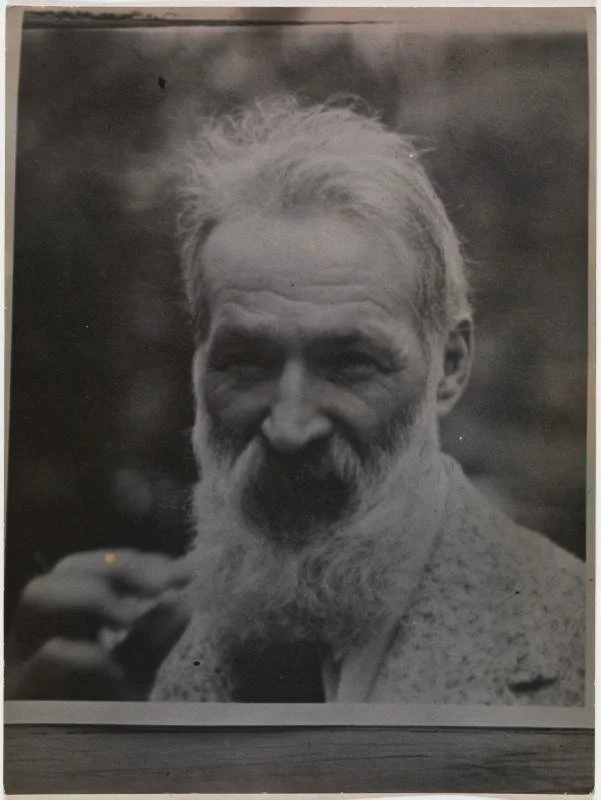
Do you see it?
I feel that same kinship for one of my favorite fellow countrymen, Scottish singer-songwriters Dougie Maclean.
One song in particular always moves me. It is about his father teaching him how to use a scythe and how effortless his father made it look where for young Dougie it is like wrestling some wild beast. The line that sticks with me the most is “this is not a thing to learn inside a day, stand close me by and I’ll try to show the way”.
Yeah. Here, have a listen. Scythe Song.
Both of these things are what chocolate making is to me and what I want it to be for you. Something complex yet simple and something that takes time to master because you want to master it.
It isn’t hard, but it isn’t something to learn inside a day. It is complex mostly because there are a lot of steps and it is easy to get overwhelmed with the number of choices you could make. I get that. That is why I’ve written 4 million odd words on my website. Specifically I did that so you didn’t have to. I ducked up plenty. I took blind alleyways. I made thousands of pounds of chocolate and in that time I’ve found the chocolate’s rhythm and it’s distance to the ground and it would be my absolute honor if you would stand closely by and I’ll see if I can pass along some of that simplicity.
Sound good? Great. Do you want to top up your hot chocolate. I’m happy to wait. I think we are going to be here a bit.
How to Make Chocolate - An overview
I guess the first thing to do is tell you the basic steps for those of you that haven’t made your first batch from the whole raw bean. First off you need to start with good fermented cocoa beans. They have to be roasted and cooled and then you have to get rid of the outer skin. It’s called husk by the way. You do that by cracking the beans and then blowing the husk off. What you’re left with are roasted cocoa nibs. Those you put into this grinder thingamajig called a melanger. It has granite wheels and a granite base that is under tension and it grinds up and liquefies the nibs. You add sugar, sometimes cocoa butter, sometimes milk powder and it runs for 1-2 days. If you want a chocolate bar with a nice snap it has to be tempered. I’m more than happy to show you how to do that too. If you just want hot chocolate you don’t even have to temper it.
And that’s it.
See what I mean about being pretty simple? I know, I know, you have a ton of questions. 99% of them I’ll answer in pretty short order. If after that if you have questions I’m happy to answer those too. If I’ve done my job right, 99% of the time my answer will be ‘that doesn’t matter’.
If you could be so kind, trust me to tell you want you need to know and further trust that if I have not mentioned it, I did so on purpose and not because I forgot. I’ve been doing this a long time. Part of it though is that if I were to tell you every single detail we would lose all the simplicity.
There is a classic grade school assignment teaching kids about assumptions, critical thinking and detail. The asignment is to write out the directions to make a peanut butter and jelly sandwich. It is a real hoot. Often it will look something like this.
To make a peanut butter and jelly sandwich, put peanut butter on one slice of bread and jelly on another. Put the slices together.
When someone in the know follows the directions it becomes obvious all the details that are missing. If you aren’t told to open the jars then jars and all go on the bread. After they include a step opening the jars, then the peanut butter is put on a slice of bread in a glob, after having been scoped out by hand. When they are told to use a knife to get the PB and J, they use the handle instead of holding the handle. You get the drift.
I’m telling you this to point out that I’m going to assume you have some basic competence and if I were to give you every little detail we would be right back at the start with 4 million words of complexity. No bueno.
Cocoa beans - The basics of good beans
Sourcing:
Think about where you might get raw fish for sushi. It’s probably not going to be at the supermarket, and it might not even be the local fish market. You are going to want to search out a shop that has the fish advertised as sushi grade—even if that phrase isn’t a real designation—because it communicates the fish is of appropriate taste and safety to be eaten raw. In cocoa we use slightly different short hand.
You don’t want any old cocoa beans or cocoa nibs you found on the internet, and certainly not Amazon. Nor do you want nibs you found at the local health store—they’re often old and stale.
If a review says hints of grapefruit and hops and you can’t stand either, you probably shouldn’t buy those nibs or beans. You like the sound of dried cherries and burnt caramel, go for that one. Follow your instincts.
Speaking of reviews, I always favor sellers who evaluate their own products and am wary of any seller not tasting their product and telling you those flavors. Vetting by more experienced makers saves you time, effort and money. And it is one less then for you to master.
That means you want a place like, well, Chocolate Alchemy. I’ve personally made 100% of the beans into quality chocolate. I’m not saying there are not other places like Chocolate Alchemy (though aside from the larger wholesalers I can’t think of any) but you want to get your beans from someone who has vetted them.
Fermentation, Strains and varietals:
It’s nice to know that cocoa is fermented but there is no need to know how they were fermented because clearly it was good enough because I’m offering it. They turn into good chocolate therefore it was a good fermentation. Simple.
You might hear there are 3 types of cocoa. Criollo and Forastero and the hybrid of the two called Trinatario. This is old and woefully outdated information. We now talk about 11 main primary strains and dozens of cultivar strains. There really aren’t any that are always great although there are a couple that are not awesome for chocolate making.
Don’t concern yourself about what varietal you are buying because that is just a label. Over time you’ll discover your own preferences but that is complexity you don’t need at the outset. It is no different from learning you like Cabernet Sauvignon and Merlot but not a huge fan of Pinot Noir. And just like reading reviews and tasting notes for wine to make some of your first purchases, you’ll do exactly the same thing with cocoa. And of course you are going to have to taste things to see if you like them or not. Reviews only go so far.
Don’t Judge a book by its...
Let’s see. What else is important? Oh yeah. I’ve got one more thing that I want to mention because it nearly always comes up when people get their first batch of whole cocoa beans that aren’t especially uniform in appearance.
But first, top me up with a bit of that warm chocolate and give it a generous splash of that elixir. Thanks. That’s really nice.
Ok. Cocoa beans start out purple and as they ferment they turn brown. When the majority have turned brown the beans are generally done and they are dried. During fermentation the beans are turned and mixed every day or so to keep everything even. Uneven mixing or having a mix of ripe and unripe beans can cause some beans to over ferment, some can dry out while others stay wet. Those are called slatey beans due to their color. Unripe beans can collapse and turn into what we call flats. You might be tempted to sort them out. Don’t do it. They add delightful complexity (the one time we want complexity don’t ya know), and depth of flavor.
My personal theory, that I’ve tested more than once, is that some of the black and flat and slaty beans that look like defects give the chocolate some amazing flavors, even if the individual beans tastes pretty bad. You certainly should not sort them out thinking they are bad beans. They are only ugly beans, not bad. The only things you should remove are debris like rocks and sticks. Of course. Think about it this way. Have you ever eaten a clove or cardamon or allspice all by itself? Even taken the cinnamon challenge? They are pretty well horrible, but if you don’t add small amounts of them to a fruit cake or a curry then the whole thing just tastes flat. Over twenty years doing this and I’ve watched as people demand prettier beans and I’ve watched as flavors get more flat and less dynamic.
How many bad beans are too many? The simple answer is that the flavor of the chocolate will tell you but you can’t tell by appearances. When the chocolate tastes bad, then that was too many for that batch of cocoa.
Once I got a sample so ugly it even pushed my stand for not sorting them. Out of curiosity I made three batches and compared them. One was as they arrived. One was nothing but ugly beans, slaty and flats and all, and the final one had nothing but pretty beans. The as arrived batch was simply incredible. Grape jelly, intense sweetness, bold chocolate. Duck it was great. The ugly beans had all those flavors but the balance was off. It was not bad....but neither was it good. Take a guess what the pretty boy beans turned into. Yep, it made crap chocolate. The grape and sweetness was all gone. There was chocolate but also too much bitterness—the complexity had left the building.
File that away if you ever get a set of beans that you think aren’t ready to use. Ugly beans, leave them be. Rocks and sticks, take them out.
Ok, are we good then? Wonderful!! To review, here are the highlights.
Get quality beans from someone that has made chocolate from them.
Quality beans are beans that make good chocolate
Good Chocolate is chocolate you enjoyed when you ate it
I think that is a good summary of a complex subject made simple.
There’s tons more I could tell you. We could go full chocolate geek about cocoa beans and how they are fermented and the different varieties but understanding all that doesn’t actually matter in making good chocolate on this side of the farm. What I mentioned is enough for now.
That’s all I have that I think is important. But I did promise to take your questions.
Are organic beans better?
That is complicated and a good question. I’m here talking about flavor and making good chocolate and no, I’ve never found organic beans taste any better. Is it better for the world? Probably, but the other thing is that getting certified organic is beyond the reach of many farmers. Many don’t spray herbicides or pesticides and don’t fertilize with synthetics but they can’t afford to prove it. The same goes for fair trade beans. In theory I’m all for them but in this conversation about making chocolate how much are paid for the beans doesn’t affect the flavor a wit.
You’ve got one more question? Hit me with it and then we’ll call it a night.
Which beans are best for dark chocolate and which for milk chocolate?
That’s an easy one. The best beans are any chocolate are the ones you like the best. I’m serious. In 98% of the cases any cocoa bean can be made into any chocolate and even that 2% probably still has folks going against the grain and liking a dark chocolate made from a particular bean virtually no one else likes everywhere. There are freaks everywhere.
Let’s call it a night. Please come back next week and we’ll chat about different kinds of chocolate and I’ll try and show you how to come up with your own recipes. Sound good? Great.
Have a good night and if it so moves you, maybe bring along some chocolate or anything else that makes you happy and we’ll see if we can copy it or something.
Ciao
